





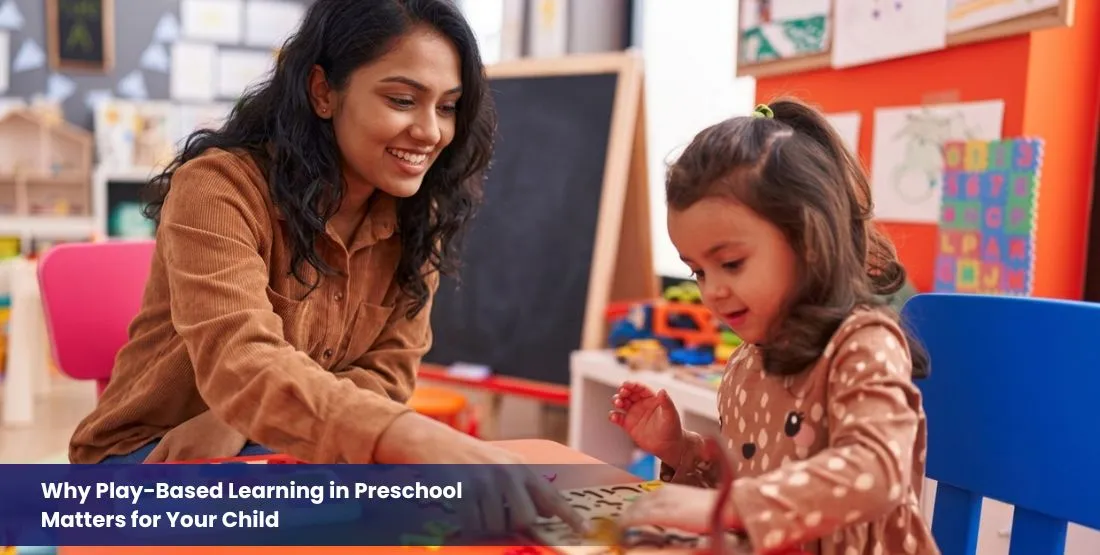
Play seems simple: a child runs around, jumps, builds a tower and then knocks it down. But something important is happening beneath all the fun. It is an example of play-based learning in preschool, and it has a much greater impact on a child than most parents realise.
Outdoor play, in particular, gives children the opportunity to move, explore, and interact freely. It is not merely a break between lessons; it is where genuine growth happens. Consider how play influences a child’s body, mind, and heart at once.
How Play-Based Learning in Preschool Builds Physical Strength
Running, climbing, and balancing are more than just enjoyable activities; they help to develop muscles, coordination, and stamina. A child who regularly plays outdoors will, over time, achieve better balance and stronger motor skills.
Simple activities such as hopping, throwing a ball, or riding a tricycle perform quiet but important functions. They help strengthen bones, improve reflexes, and burn energy in a healthy way, which usually leads to better sleep and an improved appetite.
The physical advantages aren’t always obvious at once; they build bit by bit with each day a child plays freely.
Social Growth Through Group Play
Play is seldom a solitary activity for any length of time. Children naturally tend to be drawn to one another. Whether it’s a game of tag or using a shared sandbox, it soon becomes a lesson in sharing, waiting, and negotiating.
Here, children learn through practice rather than lectures. If a child wants a toy that someone else is holding, he or she has to ask, wait or make a trade. Disagreements also occur and the children gradually learn how to settle them each time without the aid of an adult.
This is where the friendship begins. Through group activities, children learn to be empathetic, to cooperate and to master the subtle skill of getting along with one another; something that a worksheet cannot give.
Emotional Growth Hidden Inside Play
Even though play appears light and carefree, it carries deep emotional significance. Play-Based Learning in Preschool helps children develop emotional resilience, confidence, and the ability to handle challenges. A child learns resilience when he falls while climbing and then gets back up. Similarly, a child learns to cope with disappointment when he loses a game, feels upset, and then tries again.
Unstructured outdoor play is especially beneficial in this situation because there is no predetermined result, allowing children to explore freely, make their own choices, and build confidence through small, low-stakes decisions. As a result, their self-esteem develops and remains with them long after preschool.
Emotional regulation, patience, and courage develop gradually through play, long before a child can name these feelings.
Why This Matters Long Term
The benefits of play do not stay confined to preschool years. Children who get enough active, social play early on often show stronger focus, better emotional control, and healthier social skills later in school.
That’s why a good pre-primary school in Vadodara treats play as core curriculum, not extra time. It is not a break from learning. It is one of the most effective ways a young child can learn.
Parents sometimes worry that play takes time away from academic work, but it actually lays the foundation for easier academic learning later on, along with improved focus, better emotional balance, and greater social confidence.
A Balanced Mix of Play Types
Play isn’t always the same, and this variety is important. Well-organised games build discipline, unstructured play fosters imagination, and outdoor play builds strength and confidence. A well-thought-out pre-primary school in Vadodara combines all three types, helping children grow in all aspects, not just one.
This balance transforms ordinary playtime into meaningful, long-lasting development.
Choose a School That Understands the Value of Play
Play is not just a minor aspect of childhood; it is how physical strength, social skills, and emotional confidence develop, game by game. Play-Based Learning in Preschool helps children build essential life skills while encouraging creativity, independence, and confidence. Choosing a school that values this can have a lasting effect on your child’s early years, long after preschool.
At AlphaKids School, we take play quite seriously. The classrooms and outdoor areas are designed to support children’s physical, social, and emotional development every day. If you want your child to learn through enjoyable, meaningful play, choose AlphaKids School for their early years. Get in touch with us now and experience the difference for yourself.
FAQ
Q1. Why is outdoor play important for preschool children?
It builds strength, balance, and coordination through physical activity and provides fresh air, sunlight, and the chance to explore freely, supporting physical health and emotional well-being.
Q2: In what way does play contribute to the development of social skills?
Group play automatically teaches children to share, take turns, and cooperate. Through play, they learn to negotiate, settle minor disagreements, and form friendships through day-to-day interactions, without needing formal lessons.
Q3. Does play actually contribute to emotional development?
Yes, it does; it gives children small challenges, such as falling while climbing or losing a game, which helps them develop resilience, patience, and confidence. These situations teach children to regulate their emotions in a natural, low-pressure way.
Q4. Is play-based learning at least as effective as structured lessons?
For young children, play-based learning is often more effective because it builds concentration, curiosity, and social confidence, which in turn make later structured academic learning easier and more enjoyable.
Q5. What steps does AlphaKids School take to incorporate play into its curriculum?
Alpha Kids School considers play core learning, not merely a break from it; its outdoor areas and classroom activities are designed to promote physical, social, and emotional development through ordinary, enjoyable play.